Rooted Entrepreneurs LLC's pick · Updated October 2026
Koly BAK-4 Prism 10X25 Monocular Telescope
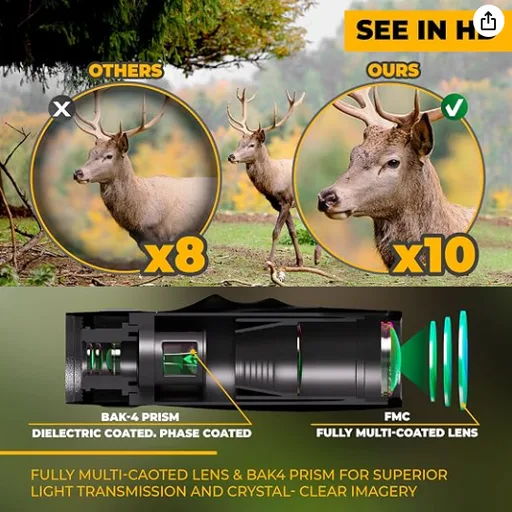
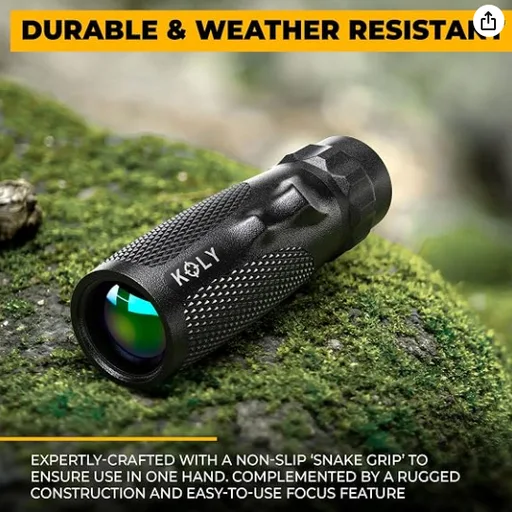
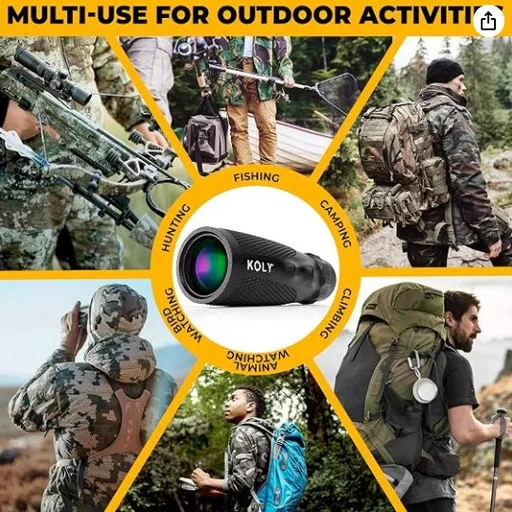
A compact monocular like this makes the most sense for someone who wants a small, one-handed option for spotting birds, checking distant trail details, or keeping a light observation tool in a pack. The appeal is straightforward. A 10x25 format is easy to carry, easy to stash, and less awkward than a larger optic when the goal is quick viewing rather than long sessions with a full-size scope or binoculars.
The selling points here are the ones buyers usually compare first. BAK-4 prisms are commonly included in higher-end compact optics because they can help support a cleaner image path than cheaper prism materials, and the weather-resistant housing is a practical thing to look for if the monocular might live in a daypack or get used outdoors in changing conditions. A snake skin grip is also the kind of detail that may matter more than it sounds. On a small optic, a textured body can make handling easier when you are wearing gloves or reaching for it quickly.
Who this is for is pretty clear. It may suit hikers who want a small tool for occasional distance checks, bird watchers who value portability over a larger field setup, hunters who want a compact spotter for brief glassing, and archery users who need a simple way to inspect targets from farther back. It can also fit anyone who wants a low-bulk optic for travel or stadium use, as long as they are comfortable with the limits of a monocular versus binocular viewing.
The main tradeoff to verify is the balance between magnification and steadiness. Ten-power magnification is useful, but small handheld optics can also be harder to hold steady than a lower-powered option, especially if you are using them for long stretches. It is worth checking the eye relief, the focus wheel feel, the actual field of view, and whether the single-eye format will work for the kind of viewing you plan to do. If you expect extended observation, a tripod-adaptable model or a larger binocular may be a better comparison point.
The evidence posture here stays simple because there are no usage notes to draw from. So the best approach is to treat the listing as a starting point and compare it against the features that matter most in real use. Look at the lens coatings, the focus range, the size of the exit pupil, and how comfortable the body looks in hand. Those details will tell you more than the headline magnification alone.
In the end, this seems best suited to someone who wants a compact, outdoor-friendly monocular and is willing to accept the usual tradeoff of a small viewing device. If portability and simple grab-and-go use matter more than a large, stable image, it may be a sensible fit. If the plan is serious or frequent viewing, it is worth checking whether a larger optic would serve you better.
Some Amazon links are affiliate links. Rooted Entrepreneurs LLC may earn a commission from qualifying purchases at no extra cost to you. As an Amazon Associate I earn from qualifying purchases.
See current price